
For quite a while, I’ve been openly hostile and judgmental toward my husband, because each night one of his limbs falls off his side of the bed, jostling me awake. Why is he so careless as to let his limbs dangle? I nudge him constantly, asking him to move toward the center of the bed. Rinse. Repeat.
Finally, we rotated our mattress and, once I was inhabiting the side formerly his, I myself started to slip and slide toward the floor, startling awake as my arm touched the hardwood.
Time to apologize: It seems our mattress has a major slope—which means time to go mattress shopping. Having spent the weekend doing just that, I was shocked to learn that there are actually people who purchase $12,000 mattresses.
My husband and I lay on one expensive mattress just for fun—to see if maybe there was a hidden massager or perhaps a tiny robot that served drinks—but, no, it was just a mattress. Gabe practiced flinging his restless legs around, as he does, and I practiced whacking him across the chest, as I do. The store was, after all, well air conditioned so it wasn’t a bad way to spend a sunny August afternoon.
We didn’t splurge on the pricey mattress, but we did invest in our first ever adjustable base and even upgraded to one with a zero gravity setting.
Testing it out, we lay suspended in zero gravity, and indeed I felt no pressure on my hips or spine. (Perhaps I should rethink my lack of interest in being an astronaut). But as the unrelenting sun beat down outside the windows and we made small talk with the salesperson, I began to think more about zero gravity—about the lack of pressure or pull on our bodies.
If only we could extend zero gravity to our minds, our emotions.
This past week, I’ve felt pulled in so many different directions. The intensity of work, the oppressiveness of the humidity, the long list of to-dos at home: all make my mind feel congested. My thoughts and worries squeeze each other, each vying for top priority.
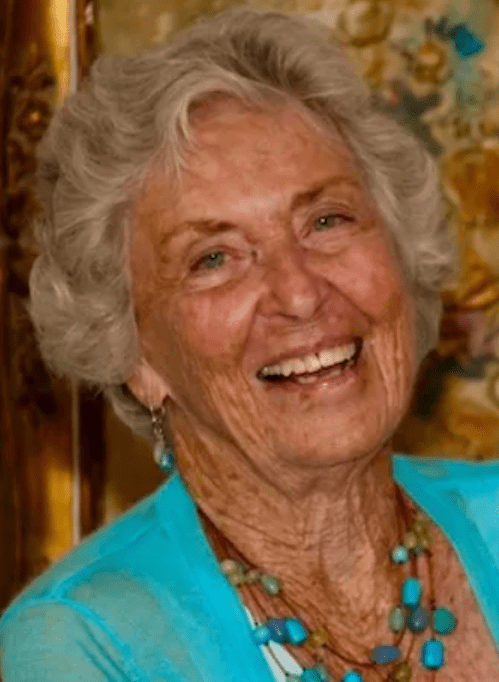
To add to my overcrowded brain, I have carried with me this week a profound grief with the loss of an elderly friend. Her name was Betty, and I’ve blogged about her before. (See “Charles and Betty,” May 23, 2020). At age 92, Betty ran circles around us all, even mowing her yard two weeks before she passed. She was my most loyal blog follower, and it’s hard to realize that today’s will be my first blog without a like, emoji or comment by Betty. It’s only right, then, that her picture adorn this page. She would roll her eyes at this tribute, for she was as humble as she was compassionate.
I miss my friend, and I want to be Betty when I grow up.
So how do we relieve the grief, the worry, the pressures that weigh us down? Is there a remote control for that?
When I was younger and feeling stressed, I would occasionally go on long drives and scream at the top of my lungs. It was such a therapeutic release, worth every day of the sore throat that followed. But what if we screamed in our homes, to our friends and family? Why are we often too proud to tell people we’re drowning? That we’re lost or overwhelmed, or feeling pressure from all directions? Why can’t we admit that we can’t hear ourselves think because of the discordant noise in our minds—or that the loneliness we’re experiencing begets a deafening, unbearable silence?
Why is it so hard to call for help from the bottom of a well?
Maybe we just all need to be more like Betty. She had that rare ability to catch you when you were about to fall, to give you a hug or smile right as you teetered on the brink of tears— to make small gestures that were just enough to relieve the pressure and lighten your load.
Perhaps we need to fine tune our abilities to interpret and anticipate the needs of those around us—to be as perceptive as the high dollar adjustable mattress base that, with the click of a button, returns us to zero gravity.
Within the next month, my first grandchild will be born. I like to imagine her, rolling and sliding around inside her mother’s womb, suspended weightless in the darkness. She has one more month to enjoy a perfectly regulated climate, void of heat or cold, of worry and fear. To be peacefully alone and content with that.
One more month in zero gravity.
And then a lifetime in which she’ll experience the vicissitudes of daily life that will often bring her to her knees. I am wise enough not to pray that my granddaughter be spared these hardships. Rather, my hope is that each trying time brings a Betty to her side—to hit reset, to restore balance, and relieve pressure.
Our mattress saleswoman said she couldn’t live without her own adjustable base—without the zero gravity setting. Life surely won’t be the same with one less Betty in the world.
Thanks, Betty, for reading. And for being my friend.

 IN THE MIDDLE
In Beartown you can go into the forest and scream. There are some woods behind my house.
LikeLike
I often wonder if this is why we shrink as we get older because we forget how to “return to zero gravity,” and let go.
LikeLike